Improved Approximation Algorithms for Squared-Metric Facility Location with Outliers
Zhen Zhang, Fuzhen Liang, Lin Jiang (Hunan University of Technology and Business); Qilong Feng (Central South University)
20th Annual Conference
TAMC 2026 · Qingdao, China
Submission Deadline
15 July, 2026
Notification
31 August, 2026
Conference Dates
Nov, 2026
TAMC 2026 aims at bringing together a wide range of researchers with interest in computational theory, information theory and applications. The main themes of the conference are computability, complexity, algorithms, information theory and their extensions to machine learning theory, and foundations of artificial intelligence.
Submissions
TAMC 2026 solicits high-quality papers on all aspects of the theory and applications of models of computation, including but not limited to computability, complexity, algorithms, and formal methods.
Submission Portal →Paper Submission
15 July, 2026
10 August, 2026 Extended
Acceptance Notification
31 August, 2026
25 September, 2026 Extended
Camera-Ready Deadline
15 September, 2026
5 October, 2026 Extended
Conference
13–15 November, 2026
Scope
Instructions
The submission should contain a scholarly exposition of ideas, techniques, and results, including motivation and a clear comparison with related work. Submitted papers must describe original, previously unpublished work, and must not be submitted simultaneously to any other refereed conference or journal.
Reviewing for TAMC 2026 will be double-blind. Authors must anonymize their submissions by omitting all author names, affiliations, and explicit self-identifying details from the manuscript.
Papers must be formatted using the LNCS style file without altering margins or the font point. The maximum length of the paper (including references, but excluding the optional appendix) is 12 pages. Proofs omitted due to space constraints must be placed in an appendix to be read by the program committee members at their discretion. Papers that deviate from these guidelines risk being rejected without consideration of their merits. Only electronic submission will be allowed via the EasyChair online conference system.
Springer LNCS Information →Recognition
Awards will be given to the best paper and the best student paper. To be eligible for the best student paper award, all authors must be full-time students at the time of submission. Please indicate in the final line of the abstract that the paper is being considered for the best student paper award. The program committee reserves the right to withhold these awards or to split them between multiple recipients.
Publication
The proceedings of TAMC 2026 will be published by Springer-Verlag in the Lecture Notes in Computer Science (LNCS) series. All accepted papers will be included in the official proceedings volume.
Springer LNCS
Lecture Notes in Computer Science
Selected papers may be invited to submit extended versions to special issues of the following peer-reviewed journals:
All previous TAMC proceedings are published in Springer LNCS and are available via SpringerLink.
Browse on SpringerLink →TAMC 2026 proceedings volume link will be posted here upon publication.
Organization
Manindra Agrawal
Indian Institute of Technology, India
Jin-Yi Cai
University of Wisconsin – Madison, USA
John Hopcroft
Cornell University, USA
Angsheng Li
Beihang University, China
Zhouchen Lin
Peking University, China
Zhiyong Liu
Institute of Computing Technology, Chinese Academy of Sciences, China
Xiaoming Sun
Institute of Computing Technology, Chinese Academy of Sciences, China
Xiuzhen Cheng
Shandong University, China
Haitao Jiang
Shandong University, China
Yangguang Shi
Shandong University, China
Ankang Sun
Shandong University, China
Ding-Zhu Du
The University of Texas at Dallas, USA
Mingyu Xiao
University of Electronic Science and Technology of China, China
Hsiang-Hsuan Liu
Utrecht University
Bo Li
The Hong Kong Polytechnic University
Thomas Erlebach
Durham University
Yicheng Xu
Chinese Academy of Sciences
Peng Zhang
Shandong University
Donglei Du
University of New Brunswick
Xujin Chen
Chinese Academy of Sciences
Qilong Feng
Central South University
Guanghui Wang
Shandong University
Chenhao Wang
Beijing Normal University
Zijun Wu
Hefei University of Technology
Hu Ding
University of Science and Technology of China
Dachuan Xu
Beijing University of Technology
Yukun Cheng
Jiangnan University
Xianyue Li
Lanzhou University
Zhao Zhang
Zhejiang Normal University
Minming Li
City University of Hong Kong
Binhai Zhu
Montana State University
Guohui Lin
University of Alberta
Ke Chen
The Pennsylvania State University
Shin-Ichi Nakano
Gunma University
Md. Saidur Rahman
Bangladesh University of Engineering and Technology
Huaming Zhang
The University of Alabama in Huntsville
Jianping Li
Yunnan University
Zhi-Zhong Chen
Tokyo Denki University
Zhongzheng Tang
Beijing University of Posts and Telecommunications
Shaofeng Jiang
Peking University
Frank Stephan
National University of Singapore
Zhihao Gavin Tang
Shanghai University of Finance and Economics
Yitong Yin
Nanjing University
Martin Ziegler
KAIST
Lu Han
Beijing University of Posts and Telecommunications
Anil Seth
Indian Institute of Technology Kanpur
Keynotes
Results
The following 45 papers have been accepted for presentation at TAMC 2026, listed in ascending order of paper number.
45 papers
Zhen Zhang, Fuzhen Liang, Lin Jiang (Hunan University of Technology and Business); Qilong Feng (Central South University)
Adiesha Liyanage, Braeden Sopp, Binhai Zhu (Montana State University)
Neng Ouyang, Xin Liu (Yunnan University)
Yue Tan, Han Xiao, Wenjing Liu, Qizhi Fang (Ocean University of China)
Zhongyi Zhang, Jiong Guo (Shandong University)
Zihan Guo, Ningyuan Gong, Yang Yu, Jianghua Lv (Beihang University)
Xiaoshuang Geng, Wenjing Liu, Genjie Qin, Qizhi Fang (Ocean University of China)
Zengwei Chen, Yingli Ran (Zhejiang Normal University)
Jianping Li, Huijuan Yang (Yunnan University); Junran Lichen (Beijing University of Chemical Technology)
Huifei Dai, Yingli Ran (Zhejiang Normal University)
Jianping Li, Shuang Ge, Xiaoxiao Yang (Yunnan University)
Mingyang Gong, Adiesha Liyanage, Braeden Sopp, Muzhou Chen, Binhai Zhu (Montana State University)
Xiaowei Li (Changsha University of Science and Technology)
Mingchao Zhou, Chensheng Ma (Zhejiang Normal University); Xuanxing Du (China Telecom Corporation Limited Jinhua Branch); Zhao Zhang (Zhejiang Normal University)
Xiaoyu Shao, Runjie Miao (Beijing University of Technology); Chenchen Wu (Tianjin University of Technology); Yapu Zhang (Beijing University of Technology)
Jun Zhang, Mingyi Li (Shandong University); Ruisheng Zheng (University of Macau); Yuan Yuan (Shandong University)
Peihua Li, Jiong Guo (Shandong University)
Dongzhao Wang, Kang Wang, Yang Li, Zhenning Zhang, Changjing Zhuge (Beijing University of Technology)
Sanjay Jain, Frank Stephan, Haoyun Tang (National University of Singapore)
Wenxiao Wang, Jiaming Hu (Shandong Management University); Cuixia Miao (Qufu Normal University); Xianhao Meng (Nankai University)
Zhikang Zhang, Weidong Li (Yunnan University)
Sijia Dai, Huahua Miao, Yicheng Xu, Yong Zhang (Chinese Academy of Sciences)
Liu Xin, Weidong Li (Yunnan University); Sunyan Hong (Kunming University); Jinfu Deng (Yunnan University)
Mingyang Gong (Montana State University); Zhi-Zhong Chen (Tokyo Denki University); Binhai Zhu (Montana State University)
Shufang Gong (Shandong Technology and Business University); Zhicheng Liu (Chinese Academy of Sciences)
Zhikang Zhang (Yunnan University)
Mengzhen Li (Beijing University of Technology)
Xinru Zhu, Zhongzheng Tang (Beijing University of Posts and Telecommunications)
Shota Ikeda (Ibaraki University); Kazumasa Shinagawa (University of Tsukuba / National Institute of Advanced Industrial Science and Technology)
Dingli Su, Yicheng Pan, Angsheng Li (Beihang University)
Ivan Adrian Koswara (National University of Singapore)
Sanjib Sadhu (National Institute of Technology Durgapur)
Guihao Wang, Jiahe Wang (Beijing University of Technology)
Yaqiao Li (Shenzhen University of Advanced Technology)
Yunlong Liu, Bingyang Wang (Hunan Normal University)
Xiang Li, Sai Ji (Hebei University of Technology); Fan Yuan (Yantai University)
Tawkir Aziz Rahman (Bangladesh University of Engineering and Technology (BUET)); Debajyoti Mondal (University of Saskatchewan); Md. Saidur Rahman (Bangladesh University of Engineering and Technology (BUET))
Jiahe Wang (Beijing University of Technology); Zhicheng Liu (Chinese Academy of Sciences); Chenchen Wu (Tianjin University of Technology); Ruiqi Yang (Beijing University of Technology)
Guihao Wang (Beijing University of Technology)
Zexu Yang, Feng Shi, Qilong Feng (Central South University)
Fengkai Liu, Xin Zeng, Feng Shi (Central South University)
Siqi Jiang, Tiantian Li, Daming Zhu (Shandong University)
Yixin Cao (The Hong Kong Polytechnic University)
Lili Mei, Zhen Wang, Shuai Yang (Hangzhou Dianzi University); Guochuan Zhang (Zhejiang University); Qiaomu Zheng (Hangzhou Dianzi University)
Kamil Khadiev, Chulpan Sharafulislamova, Aliya Khadieva (Kazan Federal University)
Paper numbers follow the original numbering and are therefore not consecutive.
Attend
Full Registration
Early Registration
USD 500
On or before 31 October, 2026
Late / On-Site
USD 550
After 31 October, 2026
Student / PC Member
Early Registration
USD 250
On or before 31 October, 2026
Late / On-Site
USD 300
After 31 October, 2026
Registration Notes
Schedule
Location
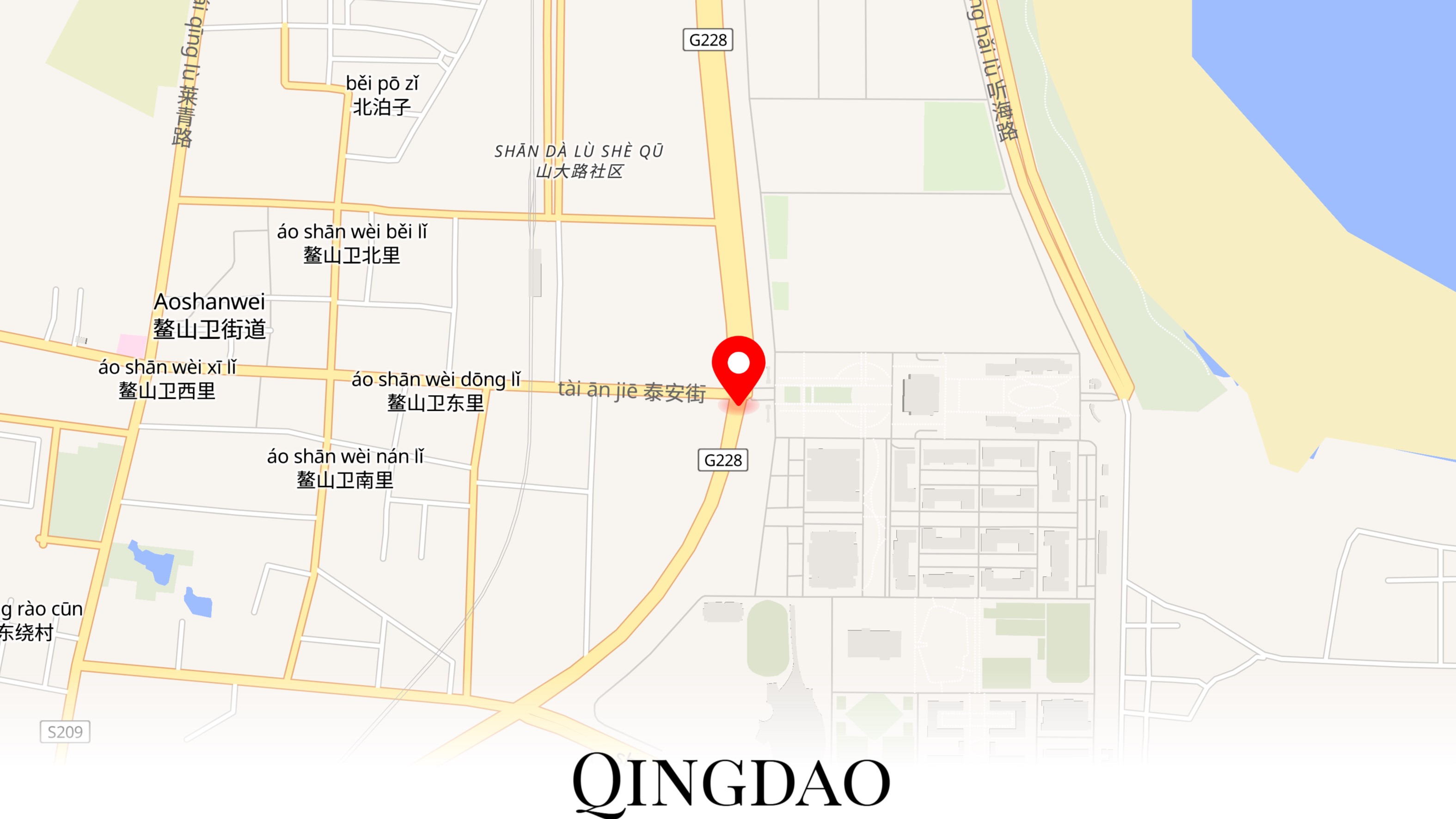
Qingdao Campus
The conference will take place at Shandong University's Qingdao campus, located in the Jimo District of Qingdao, Shandong Province, China.
Address
72 Binhai Road, Jimo, Qingdao, Shandong, China
Contact
tamc2026@outlook.com
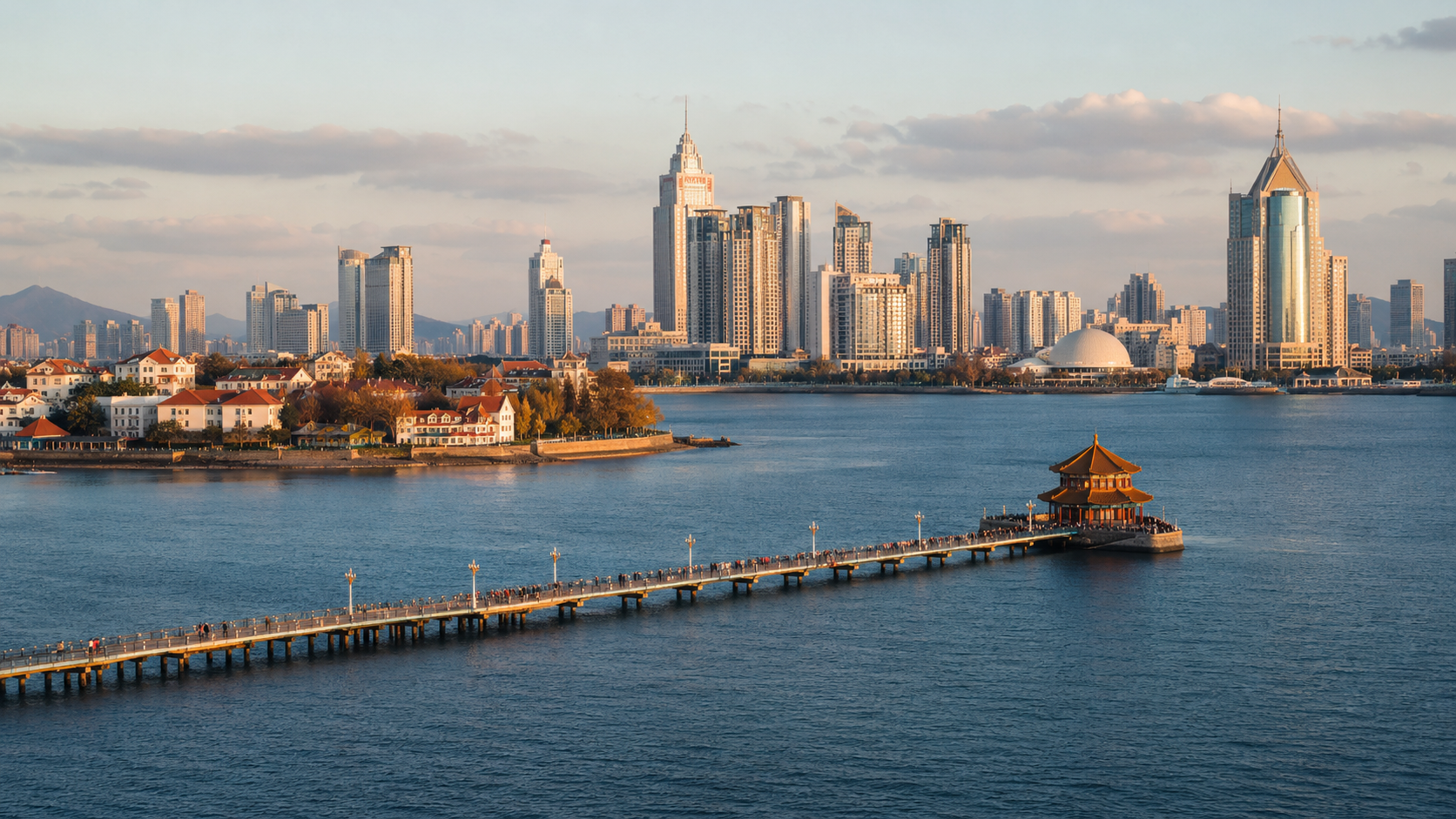
Qingdao
A coastal city famed for its European-style architecture, beaches, and Tsingtao beer.
Qingdao Jiaodong International Airport (TAO) offers direct flights from major cities worldwide.
A list of recommended hotels near the campus will be provided to registered participants.
Foreign nationals generally need a Tourist (L) or Business (M) visa before entering China. Invitation letters will be provided upon request after registration. Please also check if your country is eligible for China's recent visa-free entry policies.
Qingdao enjoys a temperate oceanic climate. November is cool and crisp — comfortable weather for an academic conference.
The currency is the Chinese Yuan (CNY / RMB). Mobile payments are ubiquitous — we strongly recommend setting up the international versions of Alipay or WeChat Pay before arrival.
Standard voltage is 220V, 50Hz AC. Sockets accept Type A (two flat pins), Type C (two round pins), and Type I (three flat pins). Please bring a universal travel adapter.
China Standard Time (CST) — UTC/GMT +8 hours. There is no daylight saving time in China.
Campus Wi-Fi (including Eduroam) will be available. For mobile data, you can easily purchase a local SIM card at the airport. Note that some international websites may require a VPN for access.